Showing posts with label content curator. Show all posts

Monday, July 30, 2018

My Time As An Influencer In Review

From how-to's to actual interviews with influencers, I feel as though my posts have provided a variety of insight to my readers through my second-hand experiences. However, in more recent posts, such as "A Glimpse into MY Influencer Feed" and "The Personal Side of Influencing," I have stepped outside of my comfort zone and shared some of my own first-hand experiences in the influencer industry. Since then, I have really realized the value in sharing these more personal experiences and have decided to share my entire influencer experience with you from the time that I started a few months back!

Starting Out: Starting out as influencer was incredibly daunting for several reasons. First of all, sometimes I found myself thinking, "Where do I even start?" In all honesty, this is a pretty normal question when starting any business of your own because it can all seem very overwhelming. For this reason, I created a step by step process for myself to follow, which I shared in "How to Become an Influencer." These initial steps include starting from a clean slate, narrowing my focus, differentiating myself, creating cohesive content, planning ahead, and being an active Instagram user myself. This process really helped me hit the ground running! In addition, with such a large pool of competition, it was easy to get discouraged before I even started. The reality is that there will always be other competition in any industry, as well as a handful of other reasons why I could potentially fail, so this was ultimately a test of how passionate I was and how hard I was willing to work to succeed!

Immersing Myself in Influencer Culture: As I've mentioned before, I work for an influencer myself and have for about nine months now. That being said, it has been significantly easier for my to immerse myself in influencer culture and learn about the do's and don'ts of the industry. I've shared a lot of my experiences while at my current job with you for the simple reason that I realize a lot of others do not get this same opportunity that I have been given! However, reading my blog or other similar pages is not the only way to learn more about influencers. Long before I worked in my current position or decided to pursue influencing myself, I followed a ton of other influencers. This helped me identify what I do and don't like from an outsider's perspective, so that I could incorporate what I do like into my own brand. This does not mean that I ever have or ever would copy another influencer, but it helps me remain more self-aware of the content that I am producing and how it is perceived by others. There is no harm is being inspired by other influencers around you!

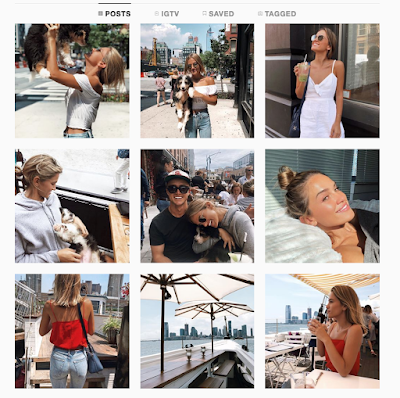
Visuals: The first visual change I made was cleaning up my feed, which I've discussed the importance of in prior posts, especially "Five Steps to a Better Feed." This gave me an almost blank canvas to work with, without losing any of my original followers. It also allowed me to identify the style I was trying to convey and how to best achieve that through the content that I was posting. I try to maintain a fairly simple color scheme, with a lot of whites, darks, and other neutrals, but I still allow myself to use pastel shades when I want to incorporate color! In addition, I follow a content cycle to ensure that my posts looks the most cohesive when they're next to each other. I also learned that this gives sufficient variety so that your followers don't get bored. Here's a snapshot of my current Instagram feed to give you an even better idea:


Staying Organized: In addition to following the content cycle that I have created for myself, I also realized how important it was to keep tabs on all of my posts. I recorded everything from the day of the week that I posted, to the time of day I posted, to the likes and comments I received, to the reach each post hit, etc. By switching to a Business Profile on Instagram, a lot of these analytics became accessible to me and they've helped me identify what my followers want to see less or more of!

Gaining Traction: This can be a major obstacle when starting out in almost any industry, but especially when it comes to influencing. For me specifically, once I revamped my Instagram and started building my own influencer brand, people seemed to pick up on that and I started to gain more traction rather naturally. The progress in this department can be rather slow at first, so it's important that I've stayed patient. That being said, in just the last few months, I have been on a steady incline when it comes to my following and the goal is to continue up that incline. If you're having trouble in this area, feel free to look back on my post, "How To Gain Traction as an Influencer" for more suggestions!

Making Partnerships: This could very well be considered a part of gaining traction as an influencer, but given how big of a role that it plays in my success, I wanted to address it separately. Before I started my influencer brand, I was under the impression that external brands were supposed to reach out to the influencer. It didn't take me long to learn that this was a huge misconception. Making introductions with brands that I wanted to work with has been essential to my growth as an influencer thus far. First of all, let me explain some of the questions that I asked myself before reaching out to other brands:

  1. How can I expect other brands to identify me as an influencer as of right now?
  2. How do I know that these other brands have simply never come across my profile before?
  3. How can they recognize the value in me promoting their brand without me introducing (or rather selling) myself first?
My list of questions goes on, but these serve as the most prominent ones in my mind when I was deciding whether or not to reach out to brands first. Needless to say, the answers to all of these questions screamed, "reach out to the brands first!" So I did just that and, in the last month alone, I have signed two new partnerships, one with a swimwear brand and another with a jewelry company. While the fear of rejection is normal, reaching out to brands first has showed initiative on my end, as well as confidence in the value that I bring to the table as an influencer!


Progress: I have made great strides since I have entered the influencer industry in May. You can see big changes in my aesthetic by visiting my Instagram profile directly (@lesliedwight), but the most prominent change is the content cycle and color scheme that I follow now to ensure cohesion. As I mentioned before, my following has been on a steady incline and is growing at a faster rate each week. The majority of my posts also have been reaching a larger audience than before, and in turn, have received more likes and comments. In just the last few months, my content has gone from about 200 likes and 4 comments on average per post, to about 400 likes and 30 comments on average per post. Also as I mentioned before, I have two pending deals with separate brands on the table now and I couldn't be more excited! My content has also been reposted by brands lately, as I have been adamant about tagging the companies that I am wearing. Although I am not being paid to promote companies yet, this has drastically helped with exposure. I continue to follow the strategies that I have discussed throughout my blog thus far and will be sure to share any changes, tips, insight, etc. that I apply to my own influencer brand with you as well!

Thursday, July 26, 2018

What Does Male Influencing Look Like?

In my last post, I answered some commonly asked questions about the male side of the influencer industry and, as promised, I want to keep exploring that arena! Today, I want to compare the visual aspect of male vs. female influencer content, and what better way to do that than through visuals?


The image above is from male influencer, Joey Zauzig's (@joeyzauzig), Instagram profile. As you can see, he maintains a pretty clear theme throughout his different posts, which is a key element regardless of gender. This is most noticeable in his top row of content (his most recent), but I will cut him some slack as the other photos were from a paid tropical vacation with Revolve (an online clothing retailer who has practically revolutionized the influencer game).


Now, here, we're looking at the profile of female influencer and close friend of Zauzig, Jourdan Sloane (@jourdansloane). She too took her business to Bermuda with Revolve, but as you can see, her collection of content has a little more variety (group shots, product shots, filler photos, selfies, etc.), but is edited very similarly.

Every influencer has different strategies based on their brand partnerships, experience, following, etc., so this certainly isn't a critique against Zauzig's feed. However, Sloane has been in the influencer AND blogging field for a few years now, whereas Zauzig has only been building his influencer brand for a single year (this also should give some explanation for the difference in their number of followers).

The takeaway from this comparison is that a lot of the knowledge in this field stems from learning from the right (and probably most experienced) people, unless you are experiencing the industry firsthand yourself. By visiting some of my older posts, you can get an even clearer idea of the tactics used by such influencers!

In addition, it's important to be aware of former reasons for "fame" when it comes to male influencers (this applies to females as well, but with less males in the industry, those who rise in popularity quickly tend to have an alternative reason for their stardom).


Dwayne "The Rock" Johnson (@therock) is a prime example of this. He is considered one of the top male influencers, but as most people know, his recognition is based on his acting career.


Above, we have Luk Sabbat (@lukasabbat), another male influencer who did not necessarily rise to influencer fame naturally. Sabbat has been seen hanging around famous people, such as Bella Hadid and Kylie Jenner, for years now, so people had a higher incentive to follow him when he pursued a more fashion-based media path. On a different note, Sabbat is also an excellent example of a fashion influencer with a very "artsy" style. He has stuck with this theme throughout the entirety of his content and clearly, with the success he's had, his consistency has been paying off.

By taking a look at some of these different profiles and even drawing a specific comparison between male and female influencer feeds, I hope you guys are able to get a better idea of the ways in which the male side of the industry works. While it is super similar to the female side in many ways, there is still a lot of unchartered territory for male influencers. That being said, if you have any unanswered questions, I'd love to hear them in the comments below!

Wednesday, July 25, 2018

The Male Influencer

When people first think of an influencer, most would probably imagine a female. That does not stem from sexism or some biased opinion of the industry, but rather the simple fact that females have dominated the influencer world thus far. However, as of recent, more and more males are entering into this field and the opportunities keep expanding. That being said, I wanted to give some insight to the new and rapidly growing male side of the industry by answering some commonly asked (but not always answered) questions.

Why have females "dominated" the influencer industry, so to speak?
The exact reasoning behind this could be up for debate, but the simplest answer is that females have dominated the beauty, fashion, and lifestyle industries for centuries. With these sub-industries in the forefront of influencing, females have gotten a natural "head start" in this arena. That's not to say that females will remain ahead of the curve though. Males seem to be catching up pretty quickly.

Does this mean that males are at a disadvantage to female influencers?
Actually, quite the contrary. So many female influencers have flooded the industry that it has become even harder to differentiate between them. This makes the need for a specific focus, style, etc. even greater for female influencers. Male and female influencers may be used to represent different products based on the obvious difference in male vs. female wants and needs, but overall males have a lot more leeway (at least for now) in terms of their focus, style, content, etc.

When it comes to brand partnerships, are there less opportunities for male influencers?
This question is almost a follow-up question to the last, but the answer is a little more complex. On the surface, it may seem like there are more brands that currently use women as the face of their products or services. However, this is mainly due to the fact that there are currently more females in the industry. You can think of this as a ratio of male to female influencers. As long as there are more females than males in the industry, you will likely be seeing more female influencer promoting other brands. Aside from products and services that are directed toward female audiences specifically, you should consider males to be in one large pool with female influencers.

Are there different strategies for entering the influencer industry as a male, as opposed to a female?
Not necessarily. Cohesive content will always be amongst the most important factors when it comes to building your brand as an influencer, regardless of gender. For more tips on entering the industry, take a look at my post "How to Become an Influencer."

As a female myself, I can't say that I have experienced the male side of the influencer industry firsthand. But through my experiences working with other male influencers, my knowledge and insight keeps growing. I love sharing what I have learned and will continue to do! Stay tuned for my next post, where I will continue to explore the male side of influencing.

Monday, July 23, 2018

The Personal Side of Influencing

Being an influencer requires a rather unique and very specific middle ground between personal and impersonal. For starters, your social media presence is dedicated to the brand you're creating, which in turn should be treated as a business. However, your followers will feel much more connected to you if they feel as though they know you on a deeper level. Finding this middle ground can be tough, and, unfortunately, there isn't really a cookie cutter way to achieve it. For me, I've been able to acknowledge the more personal sides of my life throughout a few different posts, while keeping my focus on my style. That being said, I want to share my story with you, the same story that I have tried to convey over time to those who consistently follow my posts:

I have showed interest in clothes, jewelry, make-up, etc. for as long as I can remember. Just like any young girl, I loved playing dress-up in my mom's closet and doing my sister's hair (whenever she'd let me, that is). There is one experience in particular though that has not only made me into the woman that I am today, but that has also shaped the passion that I continue to have for fashion and beauty. When I was in kindergarten, my mom was diagnosed with breast cancer. At that point, my father had already tragically passed away, so I was living with my grandparents almost full time. My grandma stayed by my mom's side throughout her treatment, which left my grandpa as the one taking care of the kids. When he came to pick me up from school one day, he was expecting his "chatty Kathy," rambunctious, six year old granddaughter to run up and give him a big hug. To his surprise, I went straight into the car, silent as ever. He knew something was wrong and, once we got home, I finally cracked. I explained to him that all the girls at school had these long, beautiful braids, that their moms did for them every morning. Not only did I want to be a part of the trend at a young age, but I also wanted a healthy mother, who could do my hair for me every morning before I got dropped off on the playground. My grandpa did the only thing he could do: reassure me of how loved I was, tell me that my hair is beautiful just the way it is, and gave me an extra big hug and kiss before he put me to bed that night. The following morning, I walked downstairs to eat my breakfast, only to find that the dining table spread was filled with bobby pins and rubber bands, not my usual cereal and milk. My 75-year old grandfather had in fact called my aunt the night prior and had learned (or at least attempted to learn) how to braid hair, all so that he could make sure I never felt like I was missing out. I will never forget being dropped off that morning, with a paper-bag lunch in one hand and two semi-janky braids on my head, but feeling as beautiful and confident as ever.

This experience gave me two huge things that have led me down the influencer path that I am on today. The first is the ability to recognize my appreciation and love for beauty at a young age. I don't mean that in a shallow way, as I believe we are all beautiful in our own unique ways. Nevertheless, it showed me that my love for something can be manifested and put into a more long-term goal, specifically career wise. Secondly, and most importantly, my grandfather, who is my best friend to this day, helped me understand that anything is possible if you have patience and are willing to work for it. There are times where I get discouraged, whether that be on the influencer front or beyond, but his attitude is something that I try to implement into my own work everyday. There are plenty of times in our lives where something seems unattainable on the surface, but I guarantee you that, if there's a will, there's a way! I hope that by sharing more about my story, you have been able to get to know the person behind all these blog posts on a deeper level, while also gaining a better understanding of how to convey personal details about your own life through your influencer platform.

Wednesday, July 18, 2018

How To Gain Traction as an Influencer

So, now that I've talked a lot about the creation and display of your content in my previous posts, such as "Five Steps to a Better Feed" and "The Feed of an Influencer," I think it's time to discuss what comes next.

After you've either started from scratch or reformed your page, you should be following a plan that specifically includes your personal style choice and a content cycle. As you continue to follow that, there's a good chance you may naturally start catching new people's attention. However, this is also the point where some people tend to get discouraged if they are not gaining the traction that they're expecting. So, here's how to kick things up a notch:
  • Hashtags: Using hashtags has been proven to help new people find your content. The most strategic approach is to use hashtags that are broad enough to be seen and used by a larger audience, but specific enough that your content does not just get lost amongst other posts. Also, "trending hashtags" can be even more helpful than trying to think of your own and helps people find your page if they are already looking at similar content.
  • Shout-Outs: With so many up and coming brands and influencers out there, you can utilize one another for promotional reasons. By offering to shout out another user (be sure to pick someone who coincides with your influencing sub-category) in exchange for your own shout-out on their page, you can easily gain more quality followers.
  • Reach Out to the Brands You Want to Represent: I've expressed the value in reaching out to brands before, but a lot of people shy away from this out of fear of looking desperate or merely being rejected. The reality is that you will be rejected at times throughout the process of becoming an influencer, but putting yourself out there first vastly widens your opportunity. Again, there are plenty of other people trying to enter this rapidly growing industry, so you have to realize that a brand is not always going to find you first and THAT'S OKAY! At the very least, make the introduction with ideal companies and if they choose to pass up the opportunity to use you at the current time, they will at least have eyes on you in the future!
  • Be an Active User Yourself: Between the Instagram algorithm (as well as the algorithms of other social platforms) and the human appreciation for reciprocation, this is a big one. By being an active user yourself (liking and commenting on others' posts, following trending hashtags and similar users), you will not only be boosting your own content (which essentially means finding a loophole to different social media algorithms), but you will also be showing your followers that you care about their stuff as much as they should care about yours.
The first two are a little cliché for my style, but they still have proven beneficial for people starting out or trying to expand their brand and for that reason, I highly encourage trying them out! As for the last two tips, these are the two that I have found the most advantageous in my experience entering the influencer industry.

Tuesday, July 17, 2018

Wise Words of an Influencer

Since a lot of my writing stems from my personal experiences in the influencer world, I wanted to give you a fresh perspective on the industry. I had the chance to sit down with someone who has worked as an influencer for almost five years now and get some answers to a lot of popular questions! For the same reason that I have chosen to not disclose my boss's name (simply out of respect for their privacy), I'm unfortunately not going to share the name of my interviewee, but for confusion's sake, I'll be referring to her as Nicole. I'm still super excited to share with you guys, so here are some of the things we discussed:

Leslie: Hey Nicole! Thank you so much for meeting with me today. I'd love to dive right in by asking you exactly what part of the influencer world you are a part of?
Nicole: Hi Leslie! So, if I had to specify the sub-industry that I work in, I would say it would be fashion influencing, but I have a lot more freedom now that I've been doing it for a few years, so that has allowed me to incorporate new and different areas of my life into my work.

Leslie: How did you enter the influencer industry?
Nicole: I always find this to be such a funny question because I never really intended on entering this industry. At the time, I was just blogging on the side as an outlet from my corporate job and I became pretty invested in my writing. Then, as social media evolved even more, I started receiving more attention from my blog viewers on my social channel, and the rest sort of feels like history!

Leslie: What would you say is the toughest part of being an influencer?
Nicole: The toughest part would probably be the overconsumption of social media sometimes. Don't get me wrong, I love what I do, but I'm still human and being an influencer doesn't make me immune to insecurities or caring too much what others think. If anything, I think it makes you care more, which is great on a professional front, but you have to know your limits for your own personal sake and allow yourself a break every once in a while.

Leslie: What would you say is the best part of being an influencer?
Nicole: The best part is hands down the people you meet and the places you go! Although all of my content is posted from the other side of a screen, creating that content typically involves a lot of other (and new!) people. When you create all these new friends through one commonality, you all become one big family. That's what makes the crazy times like fashion week so exciting. You all get to experience this together. All in all, I'm just so grateful for the opportunities that I've had thus far.

Leslie: Do you think that there is a key, for lack of a better term, to your success?
Nicole: Hmm.. I think the only key to succeeding in this industry is your level of passion. I've seen a ton of people try to become influencers for the wrong reasons and I have to say, I think it always catches up with them. That being said,

Leslie: Is there any piece of advice you would give someone trying to break into the influencer industry?
Nicole: I think that there are a lot of people who don't really realize that being an influencer is essentially the same as running your own business. They see the fun stuff and final content but forget about a lot of the hard work that influencers put into their careers. So, like I said before, I think passion is essential to succeeding in this industry, as well as staying consistent! That's huge! And if you really are passionate about it, keeping at it shouldn't be too hard.

I had a great time sitting down with Nicole and really enjoyed getting a feel for her own personal experiences in such a rapidly growing field! I love being able to bring as much insight to the table as possible, so I'm hoping to get this same opportunity with more influencers down the line. Leave me a comment with any questions you would want answered in future Q&As!

Monday, July 16, 2018

A Glimpse Into MY Influencer Feed

It's pretty easy to be all talk, especially on the other side of a screen, so I'm switching things up with this post by sharing my personal experiences while attempting to enter the influencer industry myself.

Note: Throughout this post, I'll be referring back to a couple of my previous posts, mainly the ones where I have given tips or "how-to's" regarding the process of entering the influencer industry. So, I'll be linking any previous posts that I feel could be helpful in understanding the reasoning or methods behind some of my decisions and actions during this process. Just click the titles that I'm referring to to learn more!

While I've spent a lot of time discussing the influencer world, I have yet to really explain where I stand in it. If you read the "About Me" section, you probably already know that I work under an influencer. For privacy reasons, I have chosen to keep her name private, but working under her has motivated me to dabble in the industry myself.

As I explained in one of my previous posts, "How to Become an Influencer," there are plenty of avid steps that you can take, steps that I myself have taken, to become an influencer. The very first things that I had to do were narrow my focus, choose my primary social channel, and create a visual style personal to me. My focus is mainly fashion, but since I grew up in a small beach town and now live in a major city, my fashion taste is unique enough to separate me from other common fashion and lifestyle influencers. After I identified Instagram as the most beneficial social channel for my purpose, it was important that my feed was cohesive and coincided with my style, as I explained in "Five Steps to a Better Feed." Although I've removed a lot of content in the process of cleaning up my profile, this is still a glimpse of what it looked like before:


There's nothing majorly wrong with this series of posts, but as you can see, the colors of the images are overall very different, as well as the edits. I also was not following a content cycle, which I explain the importance of in "Five Steps to a Better Feed" as well. The simplest way to describe my former feed is busy, which is something you want to, and frankly must, avoid in this industry. Now that a few months worth of content has been posted, this is a more recent idea of what my feed looks like:


I'll be honest, revamping my feed was harder than I initially thought it would be. However, following the same advice that I have given in past posts, I was able to conquer one of the biggest challenges: recreating my visual presence. Now, I use a content cycle and follow specific color schemes that are related to my own personal style, which includes the same (or at least editing tactics) for each post.

In this post, my main goal was to express the initial steps that I took to break into this industry, especially on the visual front. I plan to continue sharing my experiences with you guys in future posts as my knowledge and involvement grows, but there's something else I'd like to leave you with today.

Remember that being an influencer is technically a business. That being said, I no longer have the same privilege of posting whatever I want to post. This removes most of the personal aspects to my profile, which may not be a big deal to some people because it visibly comes with the territory of "influencing," but I'm pointing this out for a very important reason: things are not always as they seem! I had a deadline to post for a swimwear company in one of the images above and as far as my followers were concerned, I was simply frolicking along the beach that day. Little did people actually know, that photo was taken and edited days in advance and I spent the day of the actual posting visiting my grandmother in the hospital. Again, this may seem like a small price to pay or maybe even an overly personal anecdote to some, but it's important that I reiterate that others don't always get to see the big picture if you're in the influencer world.

Entering such a new and already overly-populated industry poses plenty of challenges, but I still am so happy that I took the leap! Leave me a comment with any questions you guys might have or with anything else you may want to hear about as I continue my journey!

Saturday, July 14, 2018

What Makes WeWoreWhat Different

Some people may say that they don't pick favorites, but cmon, we all have favorites. It's only natural! That being said, I have a few favorite blogs of my own. At the top of that list is Danielle Bernstein's blog, WeWoreWhat.

I initially started following Bernstein's primarily fashion-based blog years ago, so I've seen it evolve in many ways since. She has always given insights into daily outfits, style trends, where to shop, etc., but, I just noticed a new feature on her "OOTD" (a.k.a. outfit of the day) blog posts: a list of similar articles of clothing underneath the image displayed.

This feature may have existed for a while now, but it's the first time that I have seen it and it really stood out to me. You can visit Bernstein's series of OOTD blog posts yourself if you'd like, but to give you an idea, this is what it looks like:


Notice the series of clothing at the bottom. If you visit her blog and click any of those items, it will take you to a different website where you can shop the specific item. The idea is not only very clever, but very helpful to her followers who are inspired by her daily looks. I took it upon myself to comment on her most recent post:

I stand by my comment and believe that these small features are part of what makes Bernstein's blog so successful, and as I mentioned, so appealing.

I would also like to add that this also serves as an example of the role that commenting can play. Comment sections exist for feedback and not only do bloggers or influencers encourage it, but they strongly benefit from hearing directly from their readers and followers. Feel free to leave me a comment on what you want to hear about next!

Wednesday, July 11, 2018

Maybe You Actually Can Trust Wikipedia


I recently took it upon myself to edit the Wikipedia page, “Influencer Marketing,” which I discuss in depth in one of my previous posts, "Where to Start Learning About Influencer Marketing."

After a few weeks, I wanted to revisit the page and see if any additions or changes had been made. To my pleasant surprise, the entire original post as well as my addition to the section titled “Why on Social Networks?,” is still intact! My main reason for sharing this with you guys is because it serves as reaffirmation to my original claim that there is in fact value in Wikipedia content. 

As I said before, a lot of the “facts” described on Wikipedia should be further researched through more consistently reliable sources, but this is a great basis. If you want to learn about the basics of Influencer Marketing and have not done so already, I highly recommend starting at this Wikipedia page. 

With such a new industry rapidly growing, there’s a lot to learn, so I’m excited to keep checking up on this page as it evolves!

Tuesday, July 10, 2018

Show Me the Money

The monetary aspect of being an influencer is a grey area for many people. How do you make money? Where does the money come from? These are two of the most common questions surrounding influencing as a career.

The simplest and most obvious answer to these questions is that influencers make their money off of promoting products or services and are paid by those companies. However, when you yourself are trying to become an influencer, this comes with a plethora of follow up questions.

The most important question is why would a company choose you to promote their product? This where your influencer brand is the most important. If you read either of previous posts, "Five Steps to a Better Feed" or "The Feed of an Influencer", you probably understand the importance of creating your own unique brand and how to best accomplish this. Your feed (or profile depending on the platform you're using) is your online identity, so the content being placed here (and how it is placed) is the only representation that brands see of you.

As long as you have a narrow enough focus and carefully curated content on your feed, the types of products or services that you intend to promote should be obvious. Such brands typically make contact with you first, especially if you show experience in your field. However, if you're just starting in the influencer industry, know that there is no need to wait for companies to reach out to you. While it may be more flattering or more encouraging, there's no shame in reaching out to similar brands or brands that you would like to showcase on your feed. Waiting for a company to find you first is sometimes a waste of time, when you can be making the introduction yourself.

In addition, you should treat this as you would any business investment. You may have to start by first buying products or services at retail value and advocating for those brands without anything in return. However, this will still help with your own brand's exposure. You may also want to consider in investing in other users who promote your page, but this is often not necessary. In due time, the next step will likely be purchasing products or services at a discount in exchange for content. Then, eventually, you will be in a place where products will not only be given to you for free, but you will be paid to endorse them.

The expression, "slow and steady wins the race," perfectly describes this industry, as it does most business ventures. But remember, the monetary profit has proven to exist in influencing if you continue to work at it.

Sunday, June 24, 2018

How to Become an Influencer

I recently realized that one of the most debated questions about influencers is how to become one. Sure, there are some people who are merely curious, but in this day in age, it seems more and more people are wondering for themselves. I've briefly touched on this in a previous post, when I explained that there are a lot of bloggers-turned-influencers out there, but what about entering the industry with no prior experience in the field? For those trying to create their own influencer brand or even just wanting to dabble in the newfound industry, here's where to start:


  • Start From a Clean Slate: First impressions are everything, so before you start branding yourself as an influencer, make sure that any pre-existing content on your channels coincides with the brand that you are trying to create. Some people go as far as creating new profiles, but keep in mind that your original followers can be helpful in gaining traction and exposure.
  • Narrow Your Focus: Although you may have many interests, a key element to branding yourself, especially as an influencer, is to hone in on your most important and relevant passion. Similar to blogging, you should be focusing on one thing, usually something specific enough to be personal but broad enough to always generate new content. For example, if your niche is food, then narrow that down further to cooking or restaurant reviews.
  • Differentiate Yourself: Taking the previous tip one step further, try to be aware of pre-existing influencers with similar interests and differentiate yourself. 
  • Create Cohesive Content: Given that you are working on a predominantly visual channel, such as Instagram, your content needs to be especially cohesive. Not only should your posts be relevant to your other posts in terms of subject, but they should also be visually appealing next to one another. Pick your color palette and stick with that by using similar backgrounds and edits for your photos. The goal is for someone to visit your profile page and immediately be able to identify your style.
  • Plan Ahead: Build up enough content for at least a month's worth of posting. This will help you with cohesive content and also with staying consistent. By using apps like Planoly, you can see what content works well together, which can also help you plan the order in which to post.
  • Be a Good User: The best way to keep others engaged is by being an active user yourself. Engage in others' posts, but also be sure to respond to those who are engaging in your content. This will help you boost exposure and recognize your most popular content (so that you can produce more). On top of everything else, it can help you beat the new Instagram algorithm too! (You know, the one that now takes posts out of chronological order and spits them out in what seems to be, but actually isn't, a random order.)
While there may not be a cookie cutter way for all of us to become successful influencers, these tips  cover the basics on how to properly dabble in this new, quickly-growing industry.

Thursday, June 21, 2018

Where to Start Learning About Influencer Marketing?


For all my high school English teachers, I have a confession: I am an avid Wikipedia user. Now, before I put anyone in a state of shock, let me explain why I find Wikipedia to be helpful. 

Given that the world of influencers is still fairly new and also constantly evolving, it’s often hard to get a full understanding of that industry. I try to stay up to date on new marketing techniques, social platforms, technological advancements, etc. (really anything that could potentially affect the market), but, yes, I am guilty of turning to Wikipedia for basic assistance in my research. While I never rely solely on Wikipedia, I have found it to be a valuable tool to gather new information or narrow my focus and then do further research on anything I find (especially to ensure it’s true). I also believe that we are responsible for helping each other learn, so I’m one of those people who actually adds to Wikipedia pages when I feel it is necessary to. That being said, when I was looking through Wikipedia just the other day, I couldn’t help but notice the vagueness of the content under, "Influencer Marketing” particularly the sub-section titled, “Why on social networks?”. The original explanation read as follows:

Brands are evolving in terms of marketing. While putting an ad on television has a high cost, working with an influencer has a negligible cost in relation to the possible benefits it can receive. For example, if an influencer has 200,000 followers on Instagram and a company gives them a product on the condition that he exposes it to his audience, this company would be making an investment of the cost of a product in exchange for reaching at least the large most followers of the public figure. More and more people areusing the Internet and more importantly speaking in terms of marketing, more and more people are using online platforms to make purchases. This increase in the number of online purchases forces some companies to invest more resources in their general advertising on the Internet and in particular on social networks such as Facebook, Twitter or those already named Instagram and YouTube among others.

This information is all incredibly valuable to someone learning about the field of influencer marketing, but it only scratches the surface for a fully loaded question. I wanted to share this Wikipedia page to help others grasp the basics of influencer marketing, but before doing so, I took it upon myself to add further explanation at the end of the section:

In addition, marketing through social networks allows for an instantaneous purchase process, as a person can see the item and typically be connected to an online retailer immediately. This creates less lag time between seeing the advertisement and being redirected to the product, which is more effective for spontaneous purchases.

This information is important to include because the original author(s) gave reasons without any elaboration. While the initial version of this section acknowledged that internet promotion is more valuable than modern television advertisements, the explanation was limited to two reasons: the number of people being reached and the difference in marketing costs. This section failed to identify the third key benefit to social media marketing. Although I only edited this one section, the lack of depth existed in most of the article. This section serves as a very clear example of how the article could have benefited from more elaborations and further detail, but, overall, I will say that this page successfully gives a good framework for the topic. I will also admit that the lapse in certain detail probably exists due to the constant changing and evolving analytics in this field. Feel free to check it out yourself (and even add anything of value, if you dare).

Tuesday, June 19, 2018

Entertainment Influencers

I recently finished watching the first season of Netflix's 13 Reasons Why, and, truth be told, I probably wouldn't have committed if it weren't for Selena Gomez's involvement in the series.

For some context, I am not some huge Selena Gomez fan. However, I tend to agree with her beliefs and opinions (well, those that she voices publicly), I follow her on social media, and I saw her creating lots of hype for the show. Additionally, I was both more hesitant and more intrigued to watch the show because of its main topic: suicide. When I was young, my father committed suicide and I've spent the majority of my life raising awareness to mental illness. That being said, it makes me excited about others doing the same, but also makes me nervous to see such a fragile topic in an entertainment setting. So, anyway, I ultimately fell into Gomez's marketing trap, watched the show, and, man do I have a lot of feelings.

First off, I think that the correlation between bullying and depression (as well as other mental disorders and suicide) that the show highlighted was a strong element. This is an arena that few television and movie creators dabble in, as it has high risk for controversy. Here, the producers established a realistic portrayal of bullying and identified the short and long-term effects that it could have on someone, especially at the vulnerable age of 16.

The series was also very well casted, which I felt contributed to the effectiveness of the show's message. The creators did not choose a high-profile cast, but rather a group of relatable yet quirky, seemingly ordinary yet unique, and diverse high school students. By doing this, the creators did not place much emphasis on the people playing these roles, but rather the characters themselves.

The show also used an excellent marketing tool: their executive producer, Selena Gomez. I already touched on this above, but, to be clear, I do respect this strategy from a business perspective. This is where the use of influencers to represent one's brand can be very effective. However, from a personal perspective, this seemed insensitive. Gomez reached millions of people through her social network when advocating for the show. While this may seem harmless, the concern is that of those millions of people who follow her, a significant percentage have been or could be affected by mental illness, suicide, bullying, sexual misconduct, etc. Many of these followers, especially the younger ones, still may have an inclination to watch the series despite the potential triggers it could evoke. My take on Gomez's advocacy for the show is, again, mainly personal, so I could understand how others may not see the need for concern here, but this raises my next point.

Perhaps my biggest critique of the series is the plot itself. I know that that may seem a bit drastic, but the mere idea of blaming others for a suicide is NOT spreading proper awareness. In regards to Gomez as the influencer behind the series, this kind of storyline strikes me as dangerous given how many young, easily impressionable people are watching based on her suggestions. Furthermore, the pain of people struggling with any kind of mental disorder or trauma is not to be diminished, but the circular concept that projecting such pain onto those who once hurt you is completely ineffective and practically barbaric. Seeking some sort of revenge does not relieve pain, nor does taking your life. However, supporting one another and forgiveness does.

As I have started the second season of 13 Reasons Why, I have found a few redeeming qualities within the show. Overall, I think that the series has potential to use its platform to spread more appropriate awareness, but as far as the first season goes, the creators were a bit too desensitized for my liking. My review stems from my honest opinion, as well as my emotional connection to the subjects covered in this show, so I hope this unique perspective allows other viewers to consider some of what I have covered today.

If you or anyone you know if ever suffering from addiction, depression, or suicidal thoughts, please call this number: 1-800-273-8255.

Wednesday, June 13, 2018

"Things Are Not Always As They Seem"

While influencers have provided new and effective methods for brands to market themselves, the impact on our personal lives appears concerning. At this point, social media, as a whole, have existed long enough for people to recognize the dangers that it poses to our mental health. There are plenty of studies and statistics out there to build an argument about the risks associated to social media, but I want to focus on perhaps the biggest potential risks that I see stemming from the influencer industry specifically.

Influencers' ability to directly impact and persuade others is what makes them such an effective marketing and business tool. People see someone like Kim Kardashian wearing Diff Eyewear sunglasses and, all of a sudden, the whole world feels like they need a pair. I would be lying if I said that I, myself, have never been tempted to purchase these glasses and, honestly, I don't even like the style of them! Again, this is what makes influencers so beneficial for brands. But, on the flip side, having so much influence over others seems disconcerting to me.

Let me ask this: Who is the biggest influence in your life? When I think of the biggest influence in my life, I think of my grandfather. After my dad passed away when I was only six months old, my grandfather voluntarily took on the role of my father figure. Throughout all the years of my life, he has exhibited resilience, selflessness, humility, and love. He exhibits the true qualities of a role model, qualities that I now aspire to have myself.

Most people would probably still answer my original question with someone who is a part of their personal lives (whether that be a friend, family member, etc.). However, now that digital technology is finding ways for us to have such personal relationships with people that we don't even know, I fear that the people on our Instagram feeds are soon going to be the biggest influences in our lives, whether we realize it or not.

Not only are more and more people starting to desire the material things and lifestyles of certain influencers, but some of them are failing to recognize the value of what they already have. The quote, "things are not always as they seem," is easily applicable here. One might call it a bit cliché, but the reality is that the way that people present their lives online is almost always glorified. We already know this though... or do we? For something that seems to be so evident and even commonly discussed (at least within my groups of friends), we seem to be giving into the fantasy lives that we see online. As a result, I feel as though there's a constant subconscious pressure, especially for the people in my age group (a.k.a. college students and young adults), to present our own lives in a certain way.

Although I could gather statistics or articles about the growing dangers of social media, I wanted to take this opportunity to explain the concerns, especially with influencers, that I see from my unique perspective of an avid social media user and a regular 21-year old girl. I may not be able to offer a grand solution to the points I have raised, but by opening this discussion from a raw and honest standpoint, I hope others feel more comfortable doing the same.

Tuesday, June 12, 2018

From Newspaper Clippings to $500,000 per Instagram Post

Marketing is defined by the Oxford English Dictionary as, "the action, business, or process of promoting and selling a product, etc., including market research, advertising, and distribution." Social media have given brands the ability to accomplish almost all aspects of marketing through one platform (which can be shared on different social media channels), but my focus throughout this blog is mainly on the advertising and exposure side of marketing.

Before social media played such a big role, brands relied on traditional advertising for exposure. By traditional advertising, I'm referring to classified ads, commercials, endorsements, posters, billboards, etc. When blogging was first created in 1994, marketing teams recognized this as a new way for their brand to gain exposure. People from all over the world quickly started blogging about everything from travel, to food, to fashion - the list goes on. This, in turn, meant that almost any brand could find a blogger that wrote about or provided content for products or services in that same industry.

While blogging has proven to be a successful marketing tool, something "bigger and better" has since entered into the arena. Social media originally did not pose a threat to blogging. Given that most bloggers already had a strong digital presence, they could easily use social media as their own marketing tool to bring their readers together and advertise their own content. However, most of the people who were once bloggers have now transformed into what we call "influencers." Another term for influencers is "content creators." Now that social media channels, such as Instagram, allow people to publish and access content more easily than ever before, the efforts that go into blogging seem impractical, resulting in most people generating content solely for their social media channels. In addition, this is also the result of a shift in demand for certain content. Although Instagram is not solely responsible, this specific social media channel has definitely impacted the demand for visual content. We have seen a drastic increase in photos and videos, as opposed to written content, since Instagram was created in 2010.

Influencers, some of which have no relationship to blogging, are now in the forefront of marketing. These content creators have generated a significant enough following that brands now look to them for exposure. From newspaper advertisements, to blog posts, to now booming Instagram profiles, the world of marketing has inarguably changed and will continue to do so as society and technology evolves.

My Time As An Influencer In Review

From how-to's to actual interviews with influencers, I feel as though my posts have provided a variety of insight to my readers through ...