Wednesday, June 27, 2018

Five Steps to a Better Feed

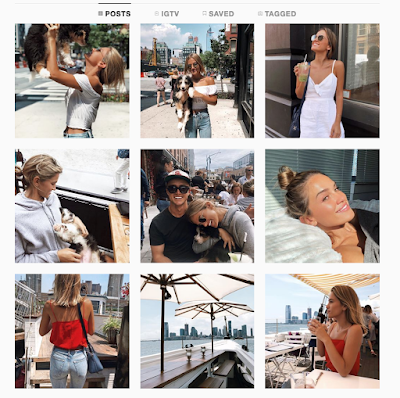
In the digital world, our feeds (or in other words, our individual profiles) serve as our first impressions of one another. It is the first place that we can go to learn about another user and it is the first place other users can go to learn about us. That being said, our feeds are a great tool for building a brand because we have the control to portray ourselves or our product/service however we want, even if it's an illusion. However, people new to the influencer industry often fail to recognize the work that goes into achieving a feed that best represents your brand, not just you. My previous post gave tips on entering the influencer arena, but the following five steps can help you specifically tackle the visual challenges of building your influencer brand:

  1. Decide on a Starting Point: As I mentioned in my previous post, you have a decision to either build your brand from scratch (a.k.a. a brand new social media presence) or work off your pre-existing profiles. First off, you will only make this process harder if you are focusing too much on working with old content, a reason why some people are drawn to a blank canvas. On the flip side, working with your original profile(s) typically allows for a stronger initial audience because you get to keep all of your original followers. But, again, if you continue to work on these platforms, you must be aware of any and all past content that you are associated with. This is an entirely personal choice but it is important to consider this thoroughly before moving forward any further, as your decision cannot really be altered. 
  2. Initiate a Plan: Once you have either decided to start with an entirely clean slate or gone in and cleaned up your original feeds, you can start planning ahead. Your plan will develop and maybe even change a bit as you follow the next few steps, but for now, you should create what is known as your content cycle. This content pattern will ensure a middle ground between variety and consistency of content. For example, a fashion influencer who primarily uses Instagram would have a cycle that looks something like this: individual shot, product shot, filler image, group shot, personal content, etc. This is just an example, but it shows the most suitable series of content, which you must identify for yourself based on your sub-industry and content, as well as an order that should be followed consistently. All of that being said, remember that cohesive content is the top visual priority, so feel free to make small adjustments to your cycle if necessary. 
  3. Choose a Color Palette: Now that we have established the beginning of the planning process, we can move onto the next step. If you chose to work with your pre-existing feed(s), go look at any of your content that is already posted. Is there a pattern with colors? If not, or if you are starting from scratch, think about the style and colors that you often use, wear, see, capture, etc.  This will help you identify the colors in your specific palette. For example, if you are a minimalist, then you should have a primarily white feed. Similarly, if you like more rustic themes and settings, then you should incorporate different shades of brown.
  4. Create an Editing Strategy: Your raw content should fall into the color palette that you have chosen, but the real key is in your editing. You should have at least one editing applications where you can adjust lighting and other details to enhance visual quality. Then, you should have only one editing application that you use to adjust colors. You should choose only one colored filter from your options, similar to the presets that Instagram offers you, but you can always change the strength of the effect to fit your specific image. This is one area where content creators either really thrive or tend to struggle, but as you become more familiar with your own process, I promise that it will get easier. Practice makes perfect, especially here.
  5. Follow Your Plan: With a definitive starting point, a content cycle specific to you, and an identified visual style, your have successfully started creating a plan for your influencer brand. However, continuing to plan ahead is imperative. Going forward, you will need to stock up on content. Remember, you're creating a brand here, not displaying your most personal self. You are no longer just posting when you feel like it, but rather following things like a specific schedule (i.e. every other day at 5 pm PST) and your specific content cycle. You are not going to produce the highest quality content, or even most relevant content for that matter, unless you give yourself enough time to collect and curate it. Take advantage of applications, such as Planoly, to help you with this. Additionally, pay attention to the responses from your different posts, understand the analytics behind them, and make any necessary adjustments to your plan.
The last step says it all, as sticking to your plan is key! Like anything else, you must not get discouraged. With an influx of people trying to dabble in this new industry, that may been difficult, but it is essential. 

Sunday, June 24, 2018

How to Become an Influencer

I recently realized that one of the most debated questions about influencers is how to become one. Sure, there are some people who are merely curious, but in this day in age, it seems more and more people are wondering for themselves. I've briefly touched on this in a previous post, when I explained that there are a lot of bloggers-turned-influencers out there, but what about entering the industry with no prior experience in the field? For those trying to create their own influencer brand or even just wanting to dabble in the newfound industry, here's where to start:


  • Start From a Clean Slate: First impressions are everything, so before you start branding yourself as an influencer, make sure that any pre-existing content on your channels coincides with the brand that you are trying to create. Some people go as far as creating new profiles, but keep in mind that your original followers can be helpful in gaining traction and exposure.
  • Narrow Your Focus: Although you may have many interests, a key element to branding yourself, especially as an influencer, is to hone in on your most important and relevant passion. Similar to blogging, you should be focusing on one thing, usually something specific enough to be personal but broad enough to always generate new content. For example, if your niche is food, then narrow that down further to cooking or restaurant reviews.
  • Differentiate Yourself: Taking the previous tip one step further, try to be aware of pre-existing influencers with similar interests and differentiate yourself. 
  • Create Cohesive Content: Given that you are working on a predominantly visual channel, such as Instagram, your content needs to be especially cohesive. Not only should your posts be relevant to your other posts in terms of subject, but they should also be visually appealing next to one another. Pick your color palette and stick with that by using similar backgrounds and edits for your photos. The goal is for someone to visit your profile page and immediately be able to identify your style.
  • Plan Ahead: Build up enough content for at least a month's worth of posting. This will help you with cohesive content and also with staying consistent. By using apps like Planoly, you can see what content works well together, which can also help you plan the order in which to post.
  • Be a Good User: The best way to keep others engaged is by being an active user yourself. Engage in others' posts, but also be sure to respond to those who are engaging in your content. This will help you boost exposure and recognize your most popular content (so that you can produce more). On top of everything else, it can help you beat the new Instagram algorithm too! (You know, the one that now takes posts out of chronological order and spits them out in what seems to be, but actually isn't, a random order.)
While there may not be a cookie cutter way for all of us to become successful influencers, these tips  cover the basics on how to properly dabble in this new, quickly-growing industry.

Thursday, June 21, 2018

Where to Start Learning About Influencer Marketing?


For all my high school English teachers, I have a confession: I am an avid Wikipedia user. Now, before I put anyone in a state of shock, let me explain why I find Wikipedia to be helpful. 

Given that the world of influencers is still fairly new and also constantly evolving, it’s often hard to get a full understanding of that industry. I try to stay up to date on new marketing techniques, social platforms, technological advancements, etc. (really anything that could potentially affect the market), but, yes, I am guilty of turning to Wikipedia for basic assistance in my research. While I never rely solely on Wikipedia, I have found it to be a valuable tool to gather new information or narrow my focus and then do further research on anything I find (especially to ensure it’s true). I also believe that we are responsible for helping each other learn, so I’m one of those people who actually adds to Wikipedia pages when I feel it is necessary to. That being said, when I was looking through Wikipedia just the other day, I couldn’t help but notice the vagueness of the content under, "Influencer Marketing” particularly the sub-section titled, “Why on social networks?”. The original explanation read as follows:

Brands are evolving in terms of marketing. While putting an ad on television has a high cost, working with an influencer has a negligible cost in relation to the possible benefits it can receive. For example, if an influencer has 200,000 followers on Instagram and a company gives them a product on the condition that he exposes it to his audience, this company would be making an investment of the cost of a product in exchange for reaching at least the large most followers of the public figure. More and more people areusing the Internet and more importantly speaking in terms of marketing, more and more people are using online platforms to make purchases. This increase in the number of online purchases forces some companies to invest more resources in their general advertising on the Internet and in particular on social networks such as Facebook, Twitter or those already named Instagram and YouTube among others.

This information is all incredibly valuable to someone learning about the field of influencer marketing, but it only scratches the surface for a fully loaded question. I wanted to share this Wikipedia page to help others grasp the basics of influencer marketing, but before doing so, I took it upon myself to add further explanation at the end of the section:

In addition, marketing through social networks allows for an instantaneous purchase process, as a person can see the item and typically be connected to an online retailer immediately. This creates less lag time between seeing the advertisement and being redirected to the product, which is more effective for spontaneous purchases.

This information is important to include because the original author(s) gave reasons without any elaboration. While the initial version of this section acknowledged that internet promotion is more valuable than modern television advertisements, the explanation was limited to two reasons: the number of people being reached and the difference in marketing costs. This section failed to identify the third key benefit to social media marketing. Although I only edited this one section, the lack of depth existed in most of the article. This section serves as a very clear example of how the article could have benefited from more elaborations and further detail, but, overall, I will say that this page successfully gives a good framework for the topic. I will also admit that the lapse in certain detail probably exists due to the constant changing and evolving analytics in this field. Feel free to check it out yourself (and even add anything of value, if you dare).

My Time As An Influencer In Review

From how-to's to actual interviews with influencers, I feel as though my posts have provided a variety of insight to my readers through ...